Customer financial data
Federal safeguards rules under the Gramm-Leach-Bliley Act expect financial institutions to dispose of customer information securely.
K12 Computers provides secure IT asset disposition for banks, credit unions and financial institutions. Retired branch PCs, laptops and servers are tracked by serial number from pickup, erased to NIST 800-88 guidelines and documented with data deletion certificates, and equipment with resale value earns a payout.
R2v3 · ISO 9001 · ISO 14001 · ISO 45001 · WISE Certified · Inc. 5000
Federal safeguards rules under the Gramm-Leach-Bliley Act expect financial institutions to dispose of customer information securely.
Auditors and examiners ask how retired assets were handled. Serialized chain-of-custody reports answer that.
Equipment leaves from many branches. One vendor and one record keeps it simple.
Under the Gramm-Leach-Bliley Act, banks follow the Interagency Guidelines Establishing Information Security Standards, which include the proper disposal of customer information. Non-bank financial institutions fall under the FTC's Safeguards Rule, and the FTC Disposal Rule (16 CFR Part 682) requires reasonable measures to dispose of consumer report information.
In practice, examiners and auditors look for a documented process and evidence that each retired device was sanitized.
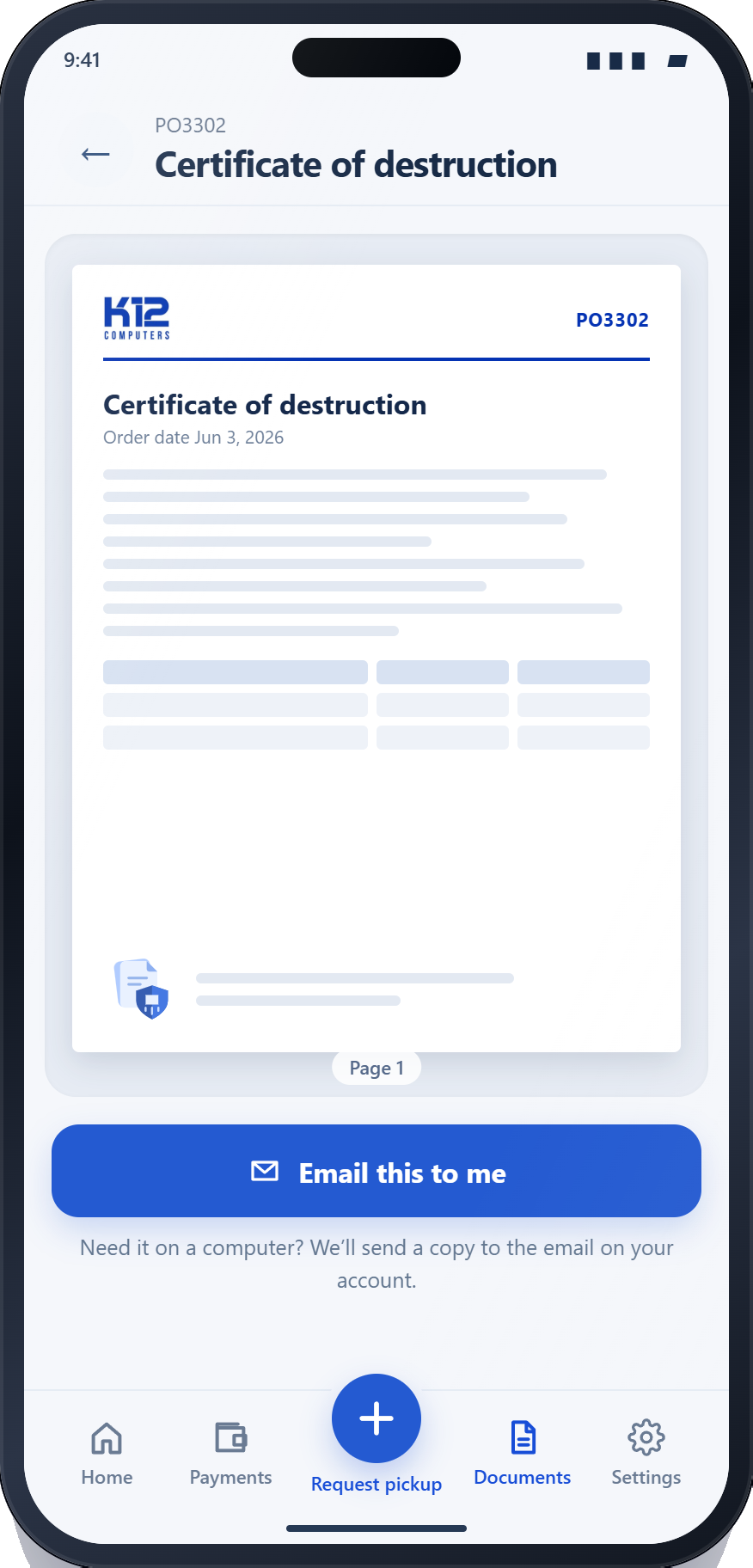
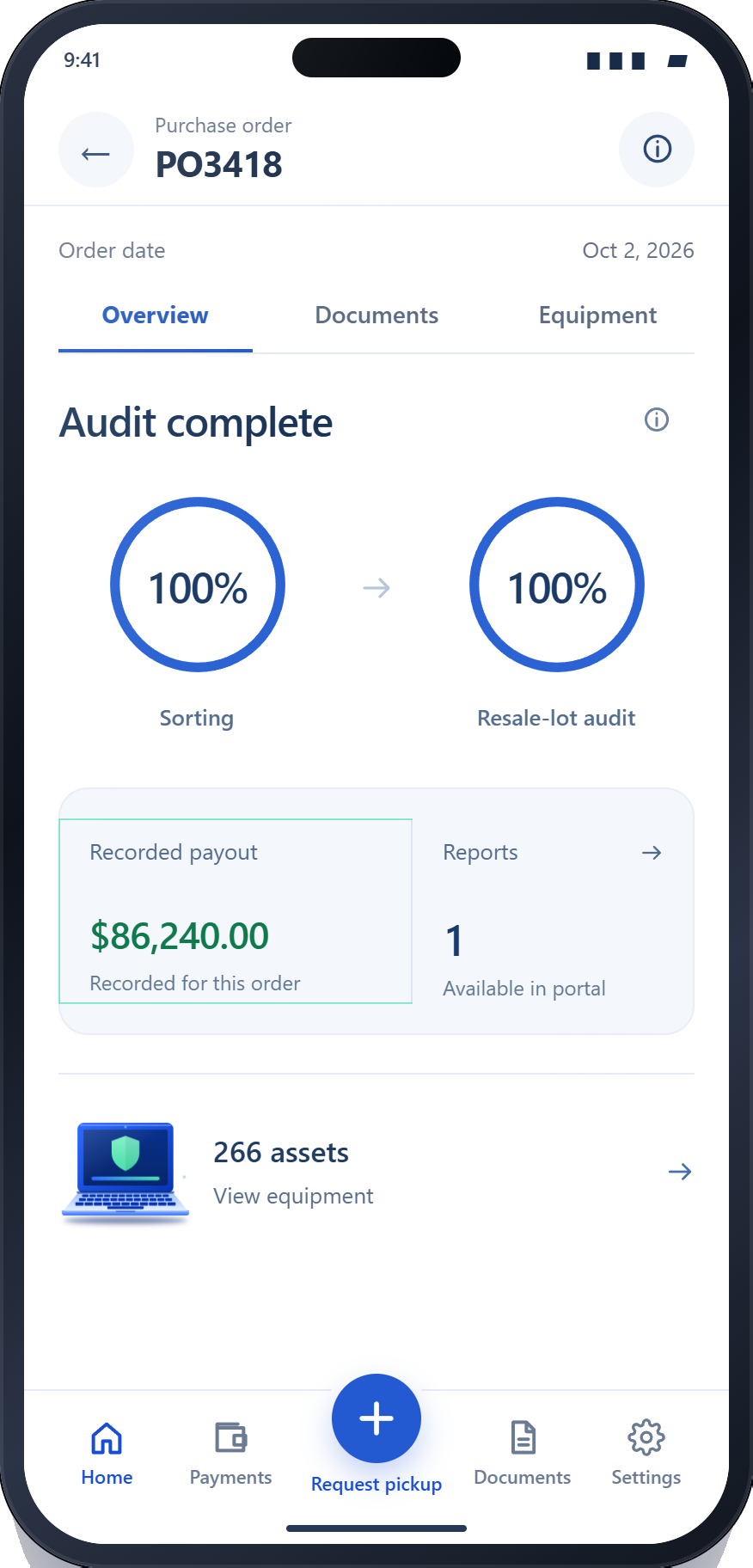
K12 records each device at pickup with a receiving report matched to the branch list, erases it to NIST SP 800-88 guidelines, and closes the record with receiving reports, serialized audit reports, data deletion certifications, shipment summaries, purchase orders and impact reports.
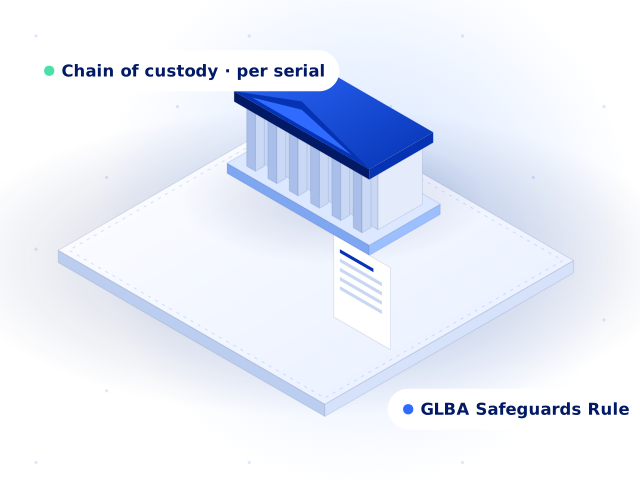
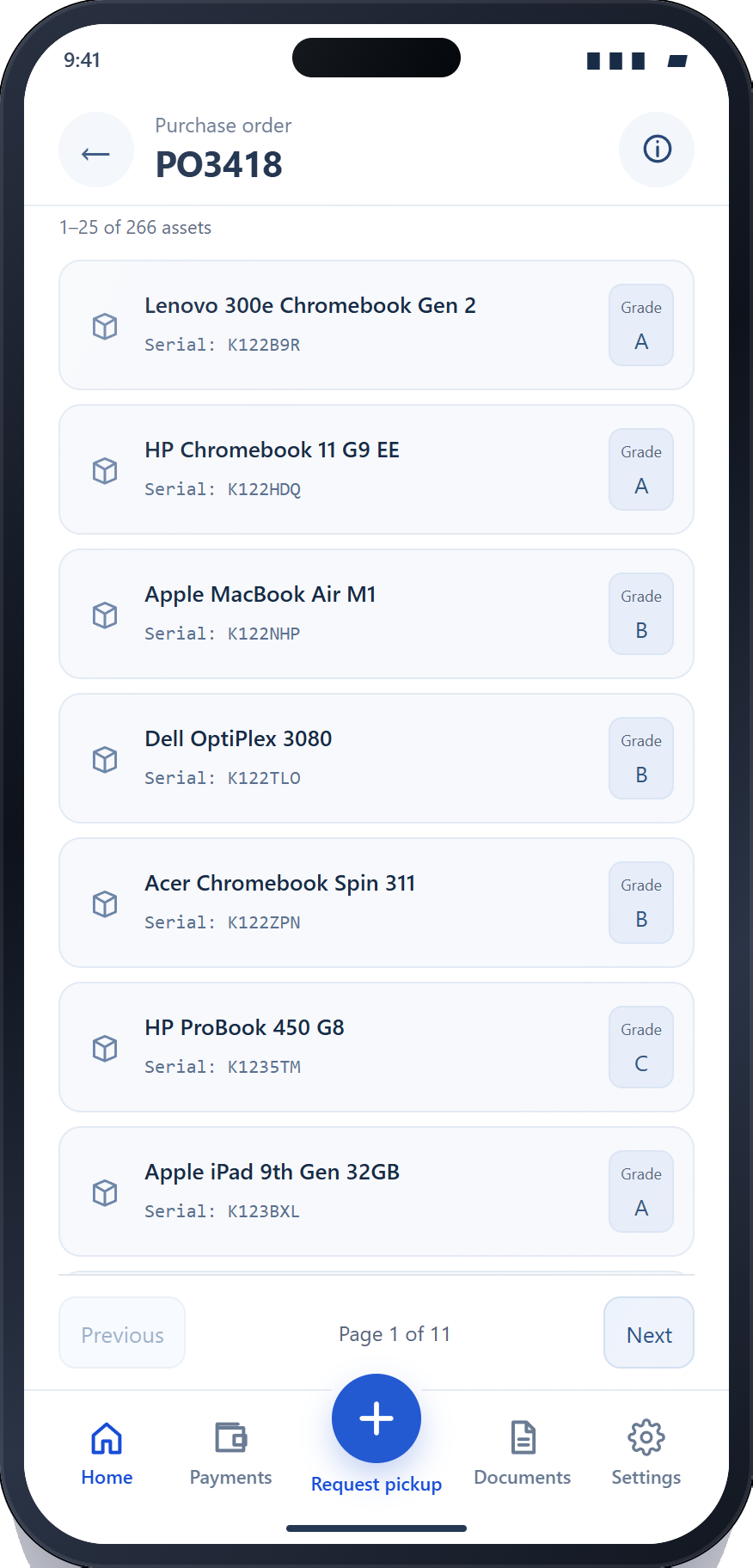
Teller workstations, branch laptops and servers can all hold customer information. K12 records each device at pickup, documents its erasure and reports its final disposition, so your information security and vendor management teams have the evidence they need.
Every step is recorded in the K12 portal. New to the terms? See the ITAD glossary.
List devices by branch and flag any media your policy requires to be physically destroyed.
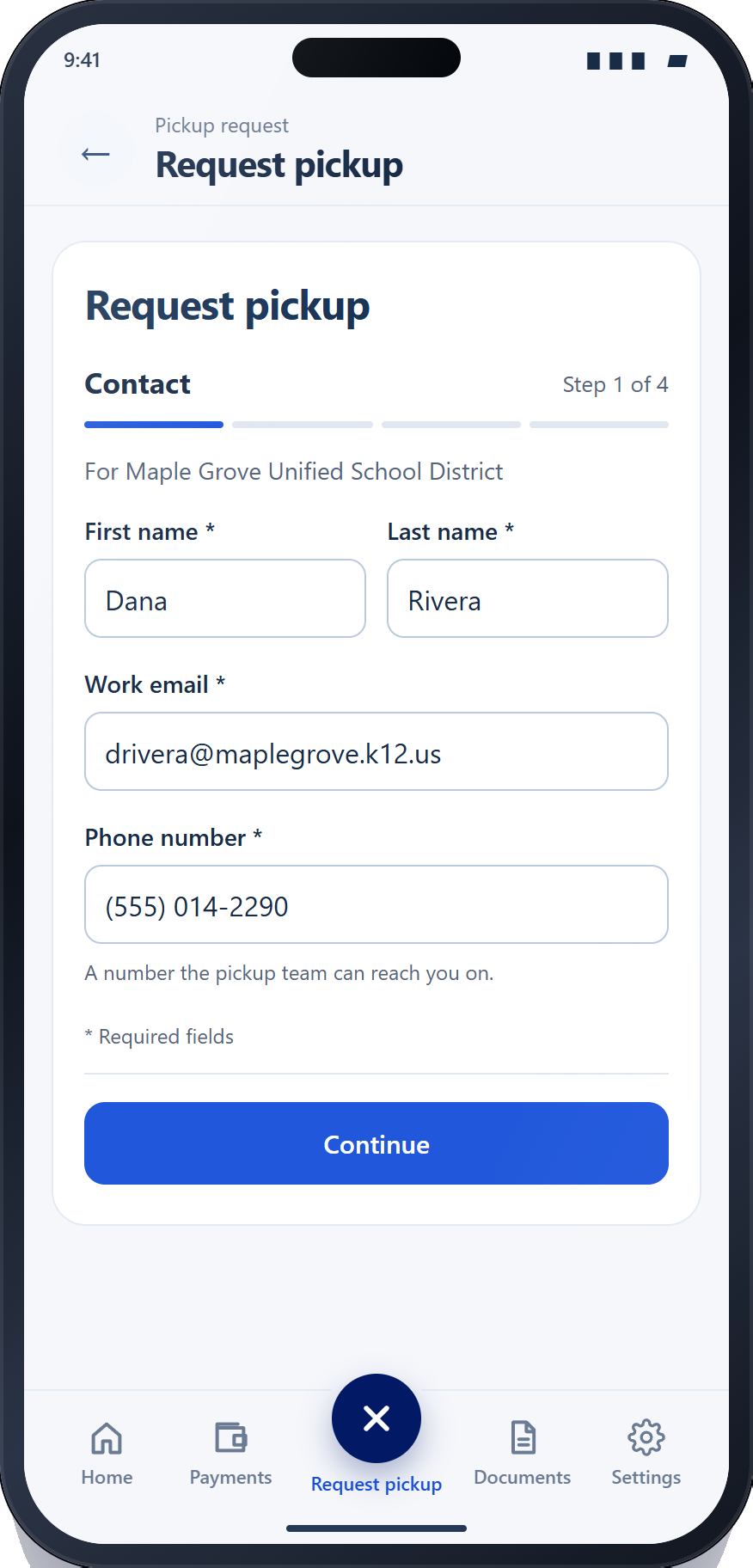
Scheduled pickups with receiving reports that match each branch's list.
NIST 800-88 erasure with third-party verified software, recorded per serial number.
Data deletion certificates, audit reports and payout on resellable devices.
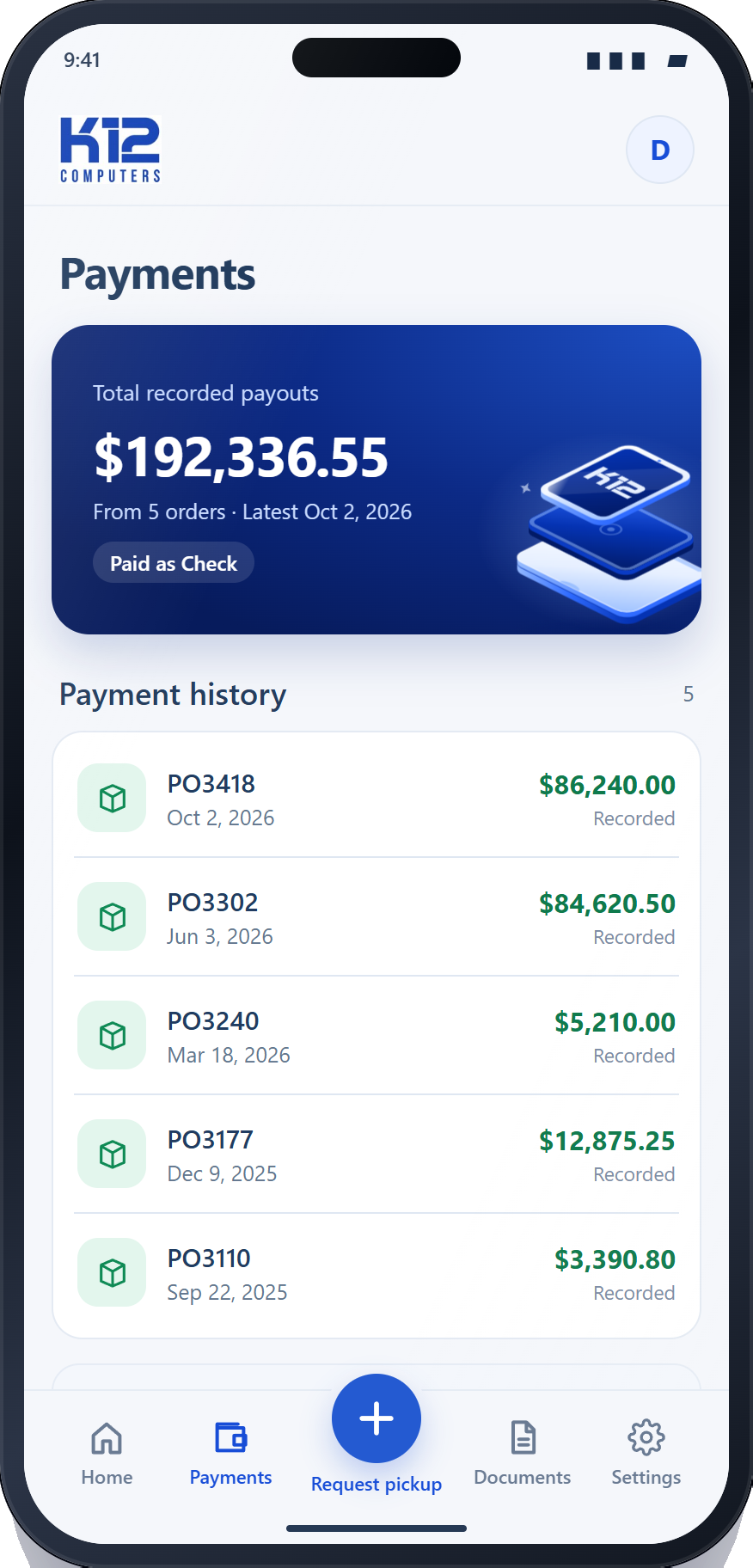
Your orders, devices, documents and payouts, in a portal that works as well on your phone as on your desk.
Financial institutions are expected to dispose of customer information securely under federal safeguards rules. A common approach is NIST 800-88 media sanitization with a certificate per device and a chain-of-custody record. K12 Computers provides both, with R2v3-certified handling.
Yes. Devices that are erased with verified software instead of shredded can be resold, and the institution receives a payout on equipment with resale value.
Yes. K12 schedules pickups across multiple locations and matches each receiving report to the branch's asset list.
Yes. Flag media your policy requires to be destroyed before pickup so K12 can plan its handling.
Primary sources from regulators, standards bodies and platform vendors. Links checked November 2026.
SERI R2 DirectoryInc.Winston-Salem JournalTIPSChoice PartnersNC TECH AssociationLinkedIn
Get an instant estimate by model, or request a pickup and our team takes it from there.